Showing posts with label Food Forest. Show all posts

06 October 2015

Sustainability & Hypnagogic Lights at Art Outside 2015

Well that was an unexpected hiatus! But despite a few setbacks we're designing again and helping our community with sustainable and beyond sustainable permaculture and food forest projects.

Speaking of going beyond sustainability! We're jumping the final hurdles to give a workshop at Art Outside this year. Cross your fingers, wish us luck, and drop us a line if we'll be seeing you there!

Art Outside night shot, Photo by Kevin Bradbury.

We'll be giving sustainability talks--more info on the schedule as we get it! I'll be focusing on prominent permaculture themes and ideas, primarily that the common idea of "sustainable" won't be enough to get our environment and ourselves out of this mess; we need to proactively heal the environment and socio-economical food systems we're in. And, of course, I'll be giving out helpful information and taking questions. 

We'll also be providing sessions with an amazing technology known by a number of names: Lucid Light, Lucia No. 3, Lucia Light, and the Lucia N3 hypnagogic light. 

In a nutshell, it's a light-based meditation appliance that drops you into the kind of meditative brainwave state that people meditate decades to achieve -- in about minute or two.       ...And the internal light show and opportunity to peek into your own consciousness will be something you'll always remember.  


 Another blog post about our attendance at Art Outside can be found here... More info, video testimonials, scheduling sessions, and information regarding purchasing a Lucia N3 can be found at the Lucid Light LLC website.

Can't wait to see you all there!

05 June 2013

World Environment Day: Promoting Permaculture

WED 2013

Today is World Environment Day, a time set aside in 1972 by the UN General Assembly to bring worldwide awareness and political action to bear on environmental issues


WED 2013 Think.Eat.Save


Think.Eat.Save.

This year's theme sounds a whole lot like permaculture: "Think.Eat.Save." It's thinking about how and where you source your food, eating responsibly, and saving our planet's ecological and human resources from the ravages of a wasteful food supply chain. It emphasizes the permaculture ideals of providing food security care for people coupled with care for the environment.


The Permaculture Approach

No More Food Waste

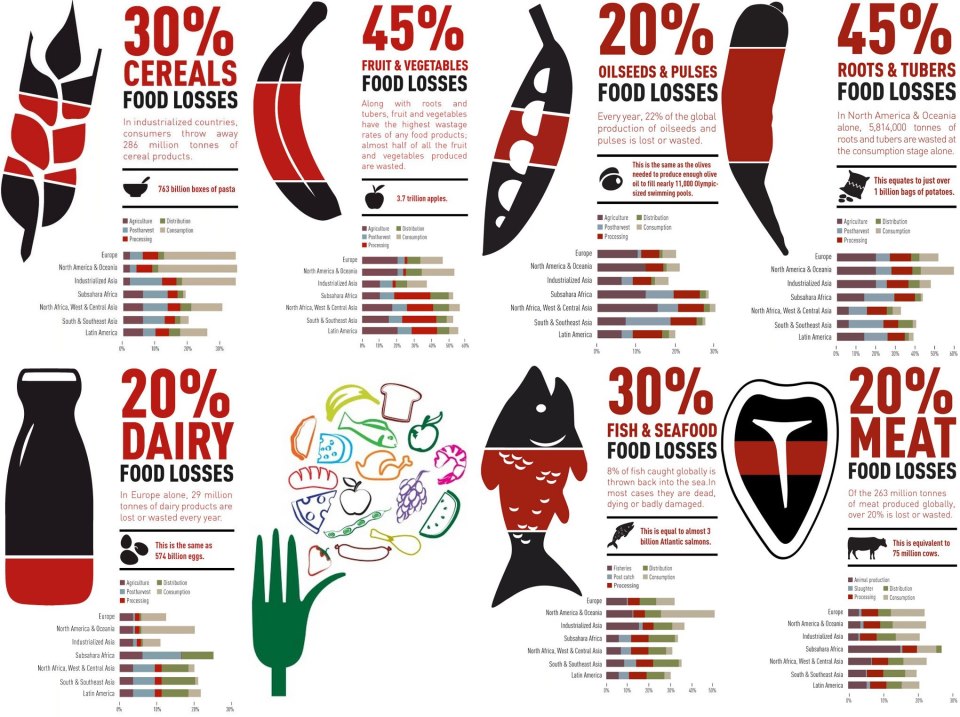
Much of the emphasis of this year's World Environment Day is focused on reducing food waste...one-third of the global food supply generated is wasted...no one eats it, it becomes trash. But in a permaculture system, the food grown is not wasted. What's harvested is eaten, and anything not eaten goes back into the system: something designed into the system consumes it, wildlife eats it or it becomes compost. The methane produced by rotting food in landfills is mitigated in the food forest by the natural decomposition cycles. 


World Environment Day 2013 Food Losses Worldwide by Type
WED 2013 Food Losses Worldwide


Keeping It Small and Local

There's also a lot of emphasis on supporting the small, family and community farms that actually provide most of the food for the world's population. No matter what the marketing of Big Agriculture preaches, they're not the ones truly addressing the world hunger problem. Most of their products go to the most profitable markets in countries that are already food secure, where much more of their food than the world average becomes waste in the production, refinement, shipping, marketing and waste cycle of the food supply chain. Small farms, however, are. Using permaculture techniques to farm sustainably and regeneratively provides food security coupled with environmental rejuvenation. 


18 May 2013

Food MythBusters and Sustainable Agriculture

The Move to Sustainable Agriculture

I can't help but be very excited that there are folks out there like Anna Lappe and the Food MythBusters helping to clarify the media hogwash about industrial agriculture and food shortages. With constant ad campaigns and political messages drumming a message of industrial ag saving the world from food shortages, it's no wonder that the voices of actual farmers and those studying the true cost of such awful practices is too often drowned out. It comes down to what the system is designed for. Industrial agriculture, on one hand, is designed to make money for a small group of people in the short run. Sustainable practices, on the other hand, are designed not only to provide truly nutritious food (imagine using nutritious food to feed the world!), but to do so in a way that IMPROVES the land and its surroundings in the process. And it does all this in a way that ensures the people and our resources thrive in the long run. 


Do We Really Need Industrial Agriculture to Feed the World?


It's clear that sustainable farming of any kind is a vast improvement, but there are levels of sustainability even to this. Many sustainable farms still rely on labor and machinery-intensive practices every year in order for food to grow. Permaculture and food forests, however, are sustainable systems that are designed to sustain themselves once they're established, and not just rely on labor and machinery year after year. And these systems don't just maintain: they grow in stability!

I'm thrilled to see the sustainable farming message getting out, and looking forward to more movement in this direction!

15 May 2013

Geoff Lawton's PDC (Permaculture Design Course)

We began our PDC (Permaculture Design Course) training with Geoff Lawton this week and  are so excited.  We have already gobbled up the introductory sessions and are eagerly awaiting the next sections.  It's late and we've been up all night studying and doing research for our business plan and for our general plant, herb and food forest knowledge.  

Tomorrow we attend four business seminars through the Relationship and Information Series for Entrepreneurs (RISE) in an attempt to clarify our direction with our business plan for the retreat and educational center. There's one thing that seems to confound a number of the entrepreneurial speakers and educators we interact with:  We don't see ourselves as having competition as we want everyone to do this.  

We learned about this and other great resources through one of Austin's great hidden resources, Lance McNeill at BCL of Texas - Business & Community Lenders.

We just ordered Bill Mollison's "PERMACULTURE, A Designers Manual".  It is considered to be the field book and go-to guide for all involved in the field.  It can be found with other wonderful permaculture and food forest references at the Tagari store, run by Mollison.  

PERMACULTURE: A Designers Manual


Product Image
by Bill Mollison


This is the definitive Permaculture design manual in print since 1988. It is the textbook and curriculum for the 72-hour Certificate course in Permaculture Design.
Written for teachers, students and designers, it follows on and greatly enlarges on the initial introductory texts, permaculture One (1978) and Permaculture Two (1979) both of which are still in demand.
Very little of the material found in this book is reproduced from the former texts. It covers design methodologies and strategies for both urban and rural applications, describing property design and natural farming techniques.
  • Designers' Manual
  • Design methods
  • Understanding patterns
  • The Humid Tropics
  • Dryland Strategies
  • Humid Cool to Cold Climates
  • Trees and their energy
  • Aquaculture
  • Concepts and Themes in Design
  • Soils and Water
  • Earthworking and Earth Resources

Broad-leaf Cattail or Bulrush - It's What's for Dinner


Any coverage of edibles in Texas should include the pervasive Cattails.  The type most often seen in this area are Typha latifolia, the Broad leaf Cattail or Bulrush.  It's a perennialherbaceous plant native in all states in the U.S., excluding Hawaii where it is considered a noxious weed and is not native.  It typically grows in water less than 2.6 feet deep.

Photo: www.discoverlife.org
Warning: Cattail roots should not be eaten raw!  

They are remarkable at pulling toxins from water sources.  If the plants are growing in polluted water, don't use cattails for food.  Runoff from roads, lead from auto exhaust and pesticides are all possible sources of contamination.  

They can be harvested in any season.  Researchers at Syracuse University found that they furnish calcium and their starch contains as much protein as corn or rice and more carbohydrate than potatoes.  

Join Rosalee and Xavier de la Foret as they venture into a Cattail swamp to demonstrate how to harvest and prepare Cattails.  This is the first video of 6 very interesting videos in their series of Cattail preparation videos:


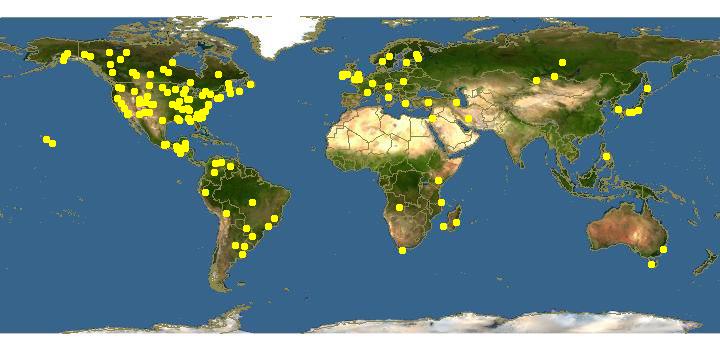
A map of where Typha latifolia can be found. 
(sourced at www.discoverlife.org)

The flower spikes resemble corn dogs placed end to end.  The top cluster is of male flowers and the bottom cluster, females.  Remove the papery sheath surrounding the flowers.  Boil the clusters for a few minutes, and you can eat them like corn on the cob, coated with goat butter.  Cattail-on-the-cob's core of the cluster is hard and inedible.  

KingdomPlantae         Division: Magnoliophyta 
                Class: 
Liliopsida 

                        Order: Typhales                                 Family: Typhaceae                                         Genus: Typha L.                                                Species: Typha latifolia                                           ScientificName                                                   Typha latifolia                          
Common Name                                               Broad leaf Cattail     

Resources:                                           
http://eol.org/pages/526590/overview

12 May 2013

Exploring the Many Uses of Our Local Plants - Turk's Cap


LOCAL AND NATIVE PLANTS OF AUSTIN AND THE HILL COUNTRY

Seeking out Plants for Gardens, Permaculture and Food Forests


It's getting easier to find more information on plants in general for Texas and for our area specifically.  We reside in the Austin/Hill Country region. But to get past general and into the more nitty-gritty, it takes some diving into books and finding multiple sources to confirm the edible, the raw material, the medicinal and the other many wonderful uses of plants. It also takes a bit of care. Closely related plants don't necessarily have the same qualities.  While some are edible and nutritious, their close cousins are poisonous. Not all websites and books give the necessary specifics.  Always check numerous references and learn how to test plants for toxicity even when you think you have properly identified a "safe" plant to eat. 

I've found a few wonderful resources, so I thought I'd share specific native plants of this region (as well as those that are well-adapted to thrive here) and what I've learned about them. I'm starting with a plant that, while it plants itself just fine, is planted in abundance by home and business owners en mass, as well.


Turk's Cap (Malvaviscus arboreus var. drummondii)

Turk's cap is a native plant with edible flowers, leaves and berries.
Several nurseries in Austin sell Turk's Cap.
The image above is from Countryside Nursery

This marvelously resilient plant is beloved for many reasons, not the least of which is its small, hibiscus-like red bloom that hummingbirds and butterflies flock to. There's so much sweet nectar waiting at the end of the flower that they're a treat for people as well.  Just pluck off the flower and munch away or sip the nectar from the plucked end. If you've ever had a tasty hibiscus tea, you'll appreciate the similar qualities of a Turk's Cap tea. It blooms most of the year and even in partial shade--it's just a super-handy plant!


The young leaves are touted by both Mark "Merriwether" Vorderbruggen (from Merriwether's Guide to Edible Wild Plants of Texas and the Southwest) and Delena Tull (author of the wildly useful book Edible and Useful Plants of Texas and the Southwest) as being great fresh, especially mixed in salads. Turk's Cap leaves also stand up well to similar treatment as spinach: steaming, cooking into quiches and frittatas and dressing up familiar dishes such as pastas and pizzas. The tender leaves are in greatest abundance in Spring, but any new flush of leaf growth will have some tender nibbles.


While the Merriweather's guide recommends making a tea from the edible, red-ripe berries, Tull gives a full recipe for Turk's Cap Jelly. While the berries are edible fresh, the seeds dominate the berries, so you get more flavor and food from making something out of the berries instead of just munching them raw. In the Austin and Hill Country area, berries ripen primarily in summer and fall.


So even if you're not ready to commit to a full permaculture or food forest landscape, you won't get fuss from the neighbors for adding this lovely, well-known and versatile native plant to your garden!


A note for those following outside of Texas: Turk's Cap is found growing natively from Texas East to South Carolina and on down to Florida.


Resources and further reading

Information on Turk's Cap used for this article can also be found here:

"Edible and Useful Plants of Texas and the Southwest" by Delena Tull.
Foraging Texas: Turk's Cap
Lady Bird Johnson Wildflower Center Native Plant Database: Turk's Cap
USDA Plants Database: Malvaviscus arboreus Dill. 

10 May 2013

How We Got Here - Our Food Forest Dream


Today, we established our DBA (doing business as)  for the food forest retreat we have been working toward obtaining.  Of course, it is not a food forest or a retreat yet; but dream it, research it, live it and it will be.

We hope to use this blog to document our adventure, allow others to learn from our successes and mistakes, and educate our soon-to-be child.  We also hope to use this as a reference for ourselves, our future students and those who share our vision.

How we got here:  We both have an interest in permaculture and food forest gardening.  We've been seeking to find ways to integrate ourselves, our communities and their communities into to a more balanced, healthy co-existence with each other, our planet and it's gifts. 

Samantha became interested in Bill Mollison's work in the years she was in Argentina and Erik did when  travelling in Northern California.  Bill is the one who coined the term permaculture.  We study his work, and the work of Graham BellPatrick WhitefieldDave Jacke, Eric ToensmeierGeoff Lawton and Robert Hart's 7-layer system

We not only appreciate Robert Hart's insights, but his guiding principles of democratically organized, small, self-sustaining communities.   There are few better places to start learning about the seven-layer system than from him.  Here is a rare interview with him that inspired/inspires us:  


My favorite line from this video: "The high art of organic growing is producing really good compost."

Foliar sprays of seaweed, liquid comfrey, and liquid nettles are used to feed the plants. These mixtures don't destroy bugs and germs, but build up disease resistence and pest resistance of the plants.  

Natural forests can be divided into distinct layers. Hart developed an existing small orchard of apples and pears into an edible landscape consisting of seven dimensions:

  1. A 'canopy' layer consisting of original mature fruit trees. 
  2. A 'low-tree' layer of smaller nut and fruit trees on dwarfing root stocks. 
  3. A 'shrub' layer of fruit bushes such as currants and berries. 
  4. An 'herbaceous' layer of perennial vegetables and herbs. 
  5. A 'ground cover' layer of edible plants that spread horizontally. 
  6. A 'rhizosphere' or 'underground' dimension of plants grown for their roots and tubers. 
  7. A 'vertical' layer of vines and climbers. 

"No epicure dish served at the most expensive restaurant can compare with fresh fruit, organically grown without chemicals, picked from one's own garden." (Robert Hart, 1913 - 2000)