Showing posts with label Native Texas Plant. Show all posts

25 July 2013

Exploring the Many Uses of Our Local Plants - Passion Flower

LOCAL AND NATIVE PLANTS OF AUSTIN AND THE HILL COUNTRY

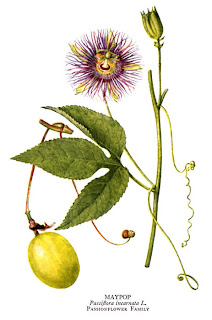
Passion Flower (Passiflora incarnata)


Also known as the passion vine or maypop, this native to Texas and many areas of the southern US is a treat in the landscape (butterflies love it) as well as being edible and medicinal. 
                      
http://www.grit.com/uploadedImages/GRT/articles/e-news/2009-04-01/Passiflora-incarnata-flower.jpg  


Images of Passiflora lutea are from Temperate Climate Permaculture

The Wildflower Center's Native Plant Database notes that Native Americans used the leaves both internally and externally as a tonic and poultice. The USDA Plants Database notes that the roots were also crushed for ear drops and tonics. 

It's best to extract the juicy pulp from around the hard seeds like one would a pomegranate. When the outer leather of the fruit dents to the touch, it's at its sweetest and ready to pop open!

The insides of the fruit may be eaten raw or pressed into cold beverages--careful, it's tangy! The tang, however, makes a great addition to smoothies with sweeter fruits. I'm also considering making tangy preserves with it, but likely in combination with berries from the garden.

The leaves are also edible steamed, though they lack much gusto alone. Steam them with other edible greens.

There are two other species of passion flower that are native to Texas and have palatable fruit: Passiflora foetida (also called stinking passion flower--presumably due to the leaves and the flower) and Passiflora lutea (yellow passion flower, though the bloom is more greenish and doesn't stand out from the rest of the vine all that well).


Foetid passionflower (Passiflora foetida) (6128013446)  
Images are from Wikimedia commons. The left is Passiflora foetida (By Bob Peterson from North Palm Beach, Florida). The right is Passiflora lutea (by TheAlphaWolf).

Resources and further reading

Information on passion flower can also be found here:

"Edible and Useful Plants of Texas and the Southwest" by Delena Tull.

"New Healing Herbs" by Michael Castleman.
"Wildflowers of Texas" by Geyata Ajilvsgi.
"A Field Guide to Medicinal Plants of Eastern and Central North America" by Steven Foster and James A. Duke.


05 June 2013

More Yummy Berries to Forage in Austin


Ehretia anacua 
Anacua, Sugarberry Anacua, Knockaway, Sandpaper Tree

It has mildly sweet fruit like hackberry, but with more flesh and less seed. It's a popular ornamental in Texas as it is hardy in dry areas.  It has white blooms, typically beginning in April. It has two-seeded berries that ripen in early summer and transition from yellow to bright orange or even red.  The tree may die back in cold winters.  It has mildly sweet fruit like hackberry, but with more flesh and less seed. It's a popular ornamental in Texas as it is hardy in dry areas.  It has white blooms, typically beginning in April. It has two-seeded berries that ripen in early summer and transition from yellow to bright orange or even red.  The tree may die back in cold winters.  
Growing Conditions
Native Habitat:  Thickets, Open Woodlands, Chaparral & Brush Country, Fence Rows.Water Use: Needs a good deal originally, then very drought tolerant.  
Soil Moisture: DryCold Tolerant: Yes, but may die back in cold winters. Does not bloom/fruit well in N. Texas.Soil Description: Well-drained, alkaline soils; Sandy, Sandy Loam, Medium Loam, Clay Loam, Clay.Not a true evergreen as it replaces it's leaves in the early spring.  

Ornamental Use: Attractive, Aromatic, Showy, Blooms Ornamentally.  Deep shade; spring blooms appear that the tree is snow-covered.  Has unusual mature trunks that look like several corded trunks bound together.
This 20-45 ft. perennial evergreen is from the Borage Family, native to the area, and know as Sugarberry.  It is the Anacua (Ehretia anacua) and is at/near the northern limit of its natural range in Austin. 

BenefitWildlife: Anaqua blossoms attract honeybees as it is a nectar source.

Photo from http://www.esacademic.com/

The fruits attract numerous birds, mammals and hippies. 

Photo Courtesy of Dave's Garden

Larval: Exclusive host for larvae and adult Anacua Tortoise Beetle (Coptocycla texana).

If you have a favorite foraging food in Austin, share it and we will do a write up on it.